In-Depth Explanation of the Web and Its Types
Exploring the Evolution, Structure, and Diverse Classifications of the World Wide Web
Key Takeaways
- The Web has evolved through distinct generations, each enhancing interactivity and intelligence.
- Websites can be classified based on functionality, content accessibility, and purpose.
- Modern web development emphasizes security, mobile responsiveness, and seamless integration through APIs.
Overview of the World Wide Web
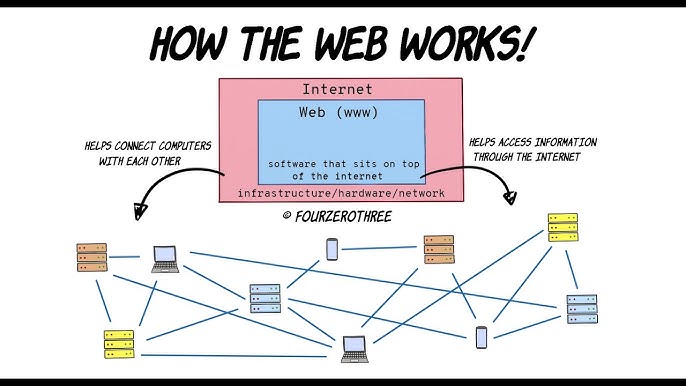
The World Wide Web, commonly referred to as the Web, is a vast, interconnected system of resources accessible via the Internet. It comprises millions of websites, each consisting of numerous web pages designed for various purposes such as information sharing, communication, entertainment, and online transactions. Users access these resources primarily through web browsers, which interpret and render content written in languages like HTML, CSS, and JavaScript.
Evolution of the Web
Web 1.0: The Static Web
Emerging in the early 1990s, Web 1.0 represents the initial phase of the World Wide Web. Characterized by static, read-only web pages, this era focused primarily on information dissemination. Websites were mostly informational, serving as online brochures with limited interactivity. Users acted as passive consumers of content, with minimal opportunities for engagement or content contribution.
Web 2.0: The Social and Dynamic Web
Transitioning in the early 2000s, Web 2.0 marked a significant shift towards interactivity and user-generated content. This era introduced dynamic web pages that could change content in real-time based on user interactions. Social media platforms, blogs, wikis, and collaborative projects like Wikipedia emerged, empowering users to create, share, and engage with content actively. The focus shifted from passive consumption to active participation, fostering a more connected and interactive online community.
Web 3.0: The Semantic and Decentralized Web
Web 3.0, often referred to as the Semantic Web, envisions a more intelligent and interconnected web where data is structured and machine-readable. This generation emphasizes data interoperability, enabling better searchability and personalized experiences. Technologies like RDF (Resource Description Framework) and SPARQL facilitate enhanced data linking and retrieval. Additionally, Web 3.0 incorporates decentralization through blockchain and distributed ledger technologies, aiming to provide users with greater control over their data and fostering trust through transparent and immutable records.
Web 4.0: The Intelligent and Predictive Web
Looking towards the future, Web 4.0 is anticipated to integrate advanced artificial intelligence and machine learning, creating highly intelligent and predictive web experiences. This generation aims to offer personalized and context-aware interactions, where the web adapts seamlessly to individual user needs. Smart systems and autonomous applications are expected to play a pivotal role, enhancing decision-making processes and anticipating user requirements with minimal input.
Types of Websites
Based on Functionality and Content Generation
1. Static Websites
Static websites consist of fixed content that remains unchanged unless manually updated by the website owner. Built primarily using HTML and CSS, each page is a separate file, making these sites simple, fast, and secure. They are ideal for personal portfolios, informational sites, and blogs that do not require frequent updates.
2. Dynamic Websites
Dynamic websites generate content on-the-fly based on user interactions or preferences. Utilizing server-side scripting languages like PHP or Python, these sites can fetch data from databases or APIs to provide personalized experiences. Examples include e-commerce platforms, social media sites, and news websites that require real-time content updates.
Based on Accessibility and Content Visibility
1. Surface Web
The Surface Web refers to the portion of the web that is publicly accessible and indexed by standard search engines like Google and Bing. It includes websites and pages that can be easily discovered and accessed without requiring special permissions, such as news sites, company homepages, and public blogs.
2. Deep Web
The Deep Web encompasses content that is not indexed by traditional search engines. This includes information behind paywalls, password-protected areas, academic databases, and internal company sites. While it is significantly larger than the Surface Web, the Deep Web serves as a repository for specialized and sensitive information.
3. Dark Web
The Dark Web is a subset of the Deep Web that is intentionally hidden and accessible only through specialized anonymizing networks like Tor. While it offers legitimate uses such as providing a safe space for free speech in oppressive regimes, it is also associated with illicit activities due to its untraceable nature.
Based on Purpose and Functionality
1. E-commerce Websites
E-commerce websites enable businesses to sell products or services online. They typically feature product listings, shopping carts, secure payment gateways, and user account management systems. Platforms like Amazon and Shopify exemplify successful e-commerce models.
2. Blog Websites
Blogs are platforms where individuals or organizations regularly post content on specific topics. They are used for sharing insights, personal experiences, professional advice, and fostering community engagement. Popular blogging platforms include WordPress and Medium.
3. Social Media Websites
Social media websites allow users to create profiles, share content, and interact with others. These platforms facilitate social networking, communication, and content sharing, with examples including Facebook, Instagram, and LinkedIn.
4. Educational Websites
Educational websites provide learning resources, courses, and information for students and educators. They are used by schools, universities, and online learning platforms like Coursera and Khan Academy to deliver educational content and facilitate remote learning.
Technical Classifications of Websites
1. Static vs. Dynamic Websites
Static websites maintain consistent content that requires manual updates, making them straightforward and secure but less flexible. In contrast, dynamic websites offer interactive and personalized content that adapts to user inputs, supported by complex backend systems.
2. Website Structural Types
Hierarchical Structure
The most common website structure, organized in a tree-like format where the homepage branches out into various sections and subpages.
Sequential Structure
Content is arranged in a linear sequence, guiding users through information in a specific order.
Matrix Structure
Allows users to navigate content in multiple pathways, offering a more flexible browsing experience.
Database-driven Structure
Utilizes databases to dynamically generate web pages based on user queries and interactions.
Web Technologies and Architecture
Core Web Technologies
The foundation of web development relies on several key technologies:
- HTML (HyperText Markup Language): Structures the content of web pages.
- CSS (Cascading Style Sheets): Manages the presentation and layout of web pages.
- JavaScript: Adds interactivity and dynamic behavior to web pages.
- Server-side Languages: Such as PHP, Python, and Ruby, handle backend processes and data management.
- Databases: Systems like MySQL and MongoDB store and retrieve data for dynamic websites.
Web Architecture
The Web operates on a client-server model:
- Clients: Users access the Web through browsers that send requests for resources.
- Servers: Web servers host websites and respond to client requests by serving the requested content.
- Protocols: HTTP and HTTPS facilitate communication between clients and servers.
Comparative Overview of Web Generations
Current Trends and Future Directions
Mobile and Responsive Design
With the surge in mobile internet usage, designing websites to be responsive and adaptable to various screen sizes is essential. Responsive design ensures optimal user experience across desktops, tablets, and smartphones.
Security Enhancements
Ensuring the security of websites is paramount. Implementing HTTPS encryption, content security policies, and protecting against common vulnerabilities like Cross-Site Scripting (XSS) and SQL Injection are critical measures for maintaining a secure web presence.
API Integration and Interconnectivity
Modern web applications heavily rely on APIs (Application Programming Interfaces) to integrate various services, such as payment processing, social media sharing, and data retrieval. This interconnectivity fosters a more seamless and efficient digital ecosystem.
Progressive Web Apps (PWAs)
PWAs combine the best features of web and mobile applications, offering offline capabilities, push notifications, and improved performance. They enhance user engagement by providing a native app-like experience directly through the web browser.
Artificial Intelligence and Machine Learning
The integration of AI and machine learning into web technologies enables more intelligent and personalized user experiences. From chatbots and recommendation systems to advanced data analytics, AI-driven web applications are becoming increasingly prevalent.
Conclusion
The World Wide Web is a dynamic and ever-evolving ecosystem that has transformed from a collection of static pages to an interactive and intelligent platform. Understanding its evolution through Web 1.0 to the anticipated Web 4.0 helps in appreciating the increasing complexity and capabilities of modern web technologies. Websites today are diverse in their functionalities, structures, and purposes, catering to a wide range of user needs and industries. As the Web continues to advance, trends like mobile responsiveness, enhanced security, API integration, and AI-driven experiences will shape its future, making it more accessible, secure, and intelligent.
References
- Expert Market - Different Types of Websites
- Website Builder Expert - Types of Websites
- GeeksforGeeks - Different Types of Websites
- Weblium - Types of Websites with Guides and Examples
- Rambknows - Types of Websites
- Marketer Milk - Types of Web Pages
- SWApps - 11 Types of Web Pages
- Halo Lab - Types of Web Pages
- Tubik Studio Blog - Types of Web Pages
- Simplilearn - Web 1.0, Web 2.0, and Web 3.0
- UXPin - Web Structures Explained
- MDN Web Docs - How the Web Works
- Dorik - Types of Websites
Nice
ReplyDelete